Eretria lies on the west coast of the island of Evia, directly opposite the Greek mainland, and today is a small, family-friendly holiday resort. What surprises many visitors: beneath today’s street grid lies one of the most important cities of ancient Greece – and between antiquity and the present lies an eventful, little-known history that still shapes the town today.
Ancient history
Eretria was founded in early Greek times and is already mentioned by Homer in the Iliad as a city that sent ships to Troy. In the 8th century BC, Eretria and neighbouring Chalkis became two of the most important trading centres of the Aegean, and at times Eretria controlled islands such as Andros, Tinos and Kea.
At the end of the 8th century BC, the city lost the so-called Lelantine War against Chalkis over the fertile Lelantine Plain – a defeat that led Eretria to found more colonies of its own around the Mediterranean.
In 490 BC the city suffered a heavy blow: because Eretria had supported the Ionian Revolt against the Persians, the Great King Darius I had the city punished. The Persians besieged, plundered and burned Eretria, killed the male citizens and carried off women and children into slavery. The great Temple of Apollo was also destroyed. Yet the city was rebuilt, took part in the Battle of Plataea in 479 BC and then joined the Delian League under Athenian leadership.
After 338 BC Eretria came under Macedonian rule and enjoyed a new golden age until the 3rd century BC. The end came in two stages: in 198 BC the Romans plundered the city during the Second Macedonian War, and it was finally destroyed in 87 BC in the First Mithridatic War. For centuries afterwards, Eretria declined into a small, insignificant place.
What can still be seen from antiquity today
The ancient theatre and the foundations of the Temple of Apollo Daphnephoros are among the best-preserved and most accessible remains; the small Archaeological Museum of Eretria displays many finds from the city and its surroundings.
In fact, the whole of Eretria is built on the foundations of the ancient city – open excavation sites can be found throughout the municipality, some right between residential houses. This is historically fascinating, but it also has a very practical downside: for buyers and sellers of property in Eretria it is often a real nuisance, as the authorities examine building projects very closely because of heritage protection, which can delay or restrict construction and renovation.
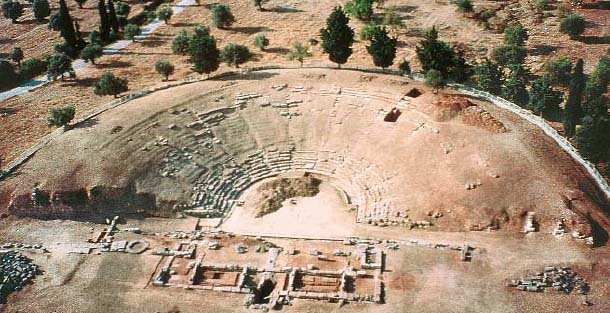
The ancient theatre of Eretria.
Photo: Bdubosso, licence CC BY-SA 3.0 (Wikimedia Commons)
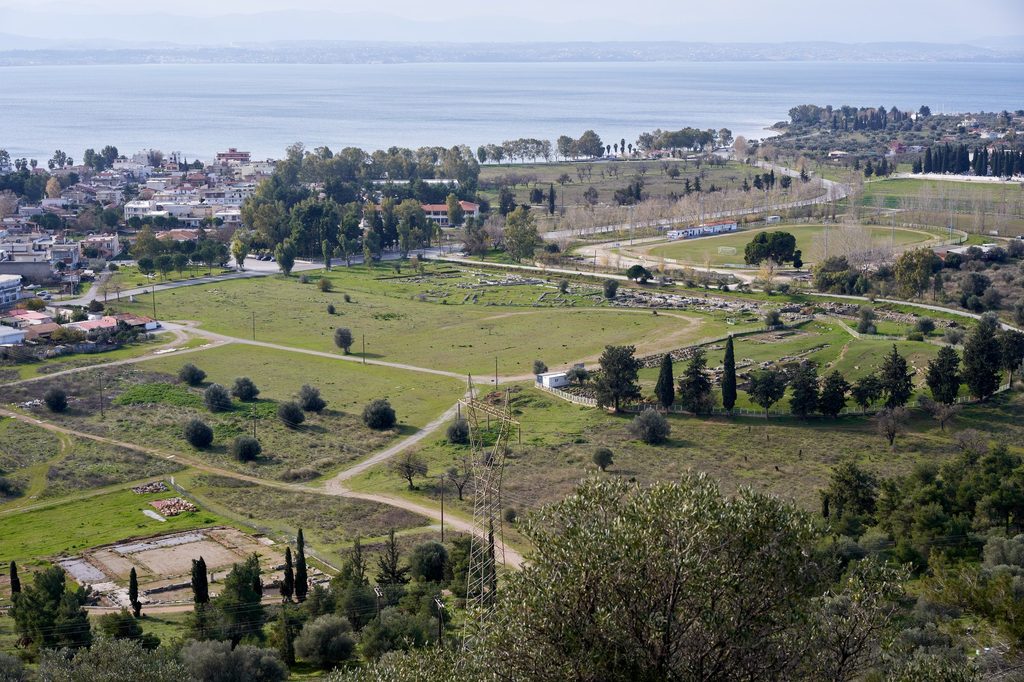
View from the acropolis of the theatre and gymnasium of Eretria.
Photo: George E. Koronaios, licence CC0 1.0 (Wikimedia Commons)
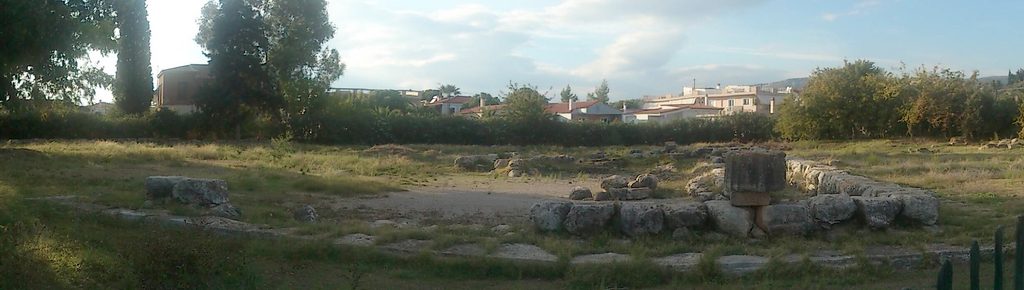
Foundations of the Temple of Apollo Daphnephoros.
Photo: Kolantreas, licence CC BY-SA 4.0 (Wikimedia Commons)
Recent history
Between the fall of the ancient city and its revival lie almost two thousand years in which only a small, insignificant village existed here. Today’s Eretria was founded in 1824 – and its founding is directly linked to one of the most tragic episodes of the Greek War of Independence: the destruction of Psara.
Psara, a small island in the north-eastern Aegean, was, together with Hydra and Spetses, one of the most important bases of the Greek fleet in the struggle for freedom against the Ottomans. On 20 and 21 June 1824 an overwhelming Ottoman fleet attacked the island. The defenders made their last stand at the fort of Palaiokastro and raised the flag bearing the words “Freedom or Death” before one of the islanders blew up the gunpowder stores – attackers and defenders died together in the explosion. In total around 17,000 people were killed or sold into slavery; the island, whose population had swelled to over 30,000 with refugees from other devastated areas such as Chios, has never fully recovered to this day.
Some of the survivors fled and scattered across southern Greece. In that same year, 1824, a group of these refugees from Psara settled on the ruins of ancient Eretria and founded a new settlement, which they first called “Nea Psara” (New Psara) – the old name Eretria was only used again for the town later.
In 1834 a proper town plan was drawn up for the new settlement – by Eduard Schaubert, a German (Prussian) architect from Breslau who had studied under Karl Friedrich Schinkel at the Bauakademie in Berlin. Shortly before, Schaubert had drawn up a plan for ancient Athens and applied similar principles to Eretria: a planned town designed for around 10,000 inhabitants that deliberately integrated and protected the ancient sites within the street grid – one reason why excavation sites still lie in the middle of the modern town today.
Among the refugees from Psara who settled in the region was the family of one of Greece’s best-known heroes of independence: Konstantinos Kanaris. Born on Psara, he became a symbol of the struggle for independence through his night-time fire-ship attacks on the Ottoman fleet, and later served five times as Prime Minister of Greece. His house near the harbour of Eretria, where he lived until his death in 1877, is now a listed building – but despite its historical value it currently stands empty and unused.
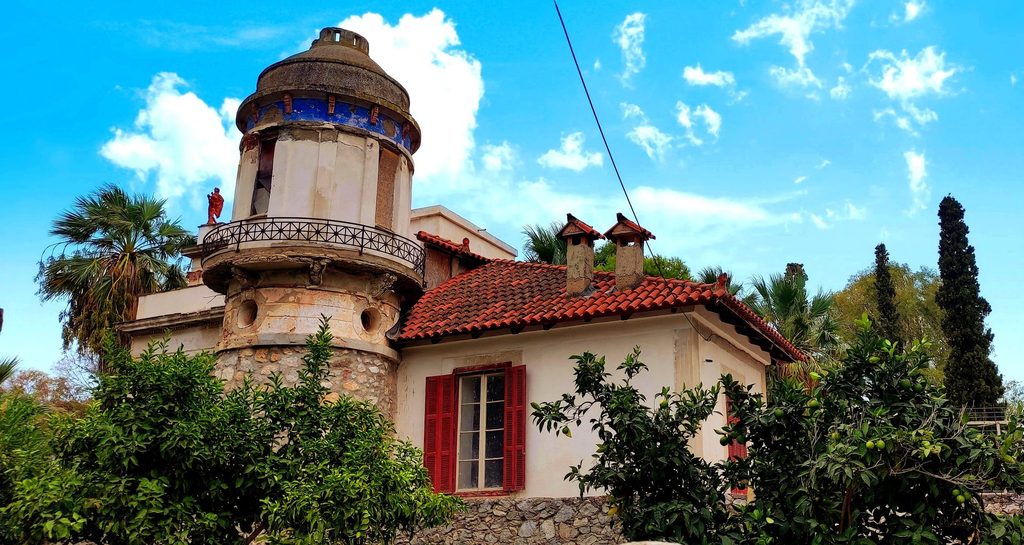
The house of Captain Kanaris in Eretria
“Island of Dreams” & more
Just off Eretria lies a small peninsula, reached by a narrow footbridge, which locals call “Pezonisi” (roughly: the island you can walk to). In the 1960s a resort was built here that was glamorous for its time, with a 52-room hotel, 46 bungalows, a nightclub, tennis courts, mini golf and volleyball courts – among guests from Greece and abroad it quickly became known as the “Island of Dreams”.
In 2008 the last operator left the complex amid a dispute over unresolved ownership and lease issues between the Greek National Tourism Organisation, the municipality and others. Since then the site has been visibly decaying: windows are broken, plaster is crumbling and many rooms have been looted. What remains are the tall pine trees planted by the founding generation, crystal-clear water and a small fishing harbour right next door that is still active today. A walk across the “Island of Dreams” has therefore long been a popular, slightly melancholic outing for guests interested in the town’s more recent history.
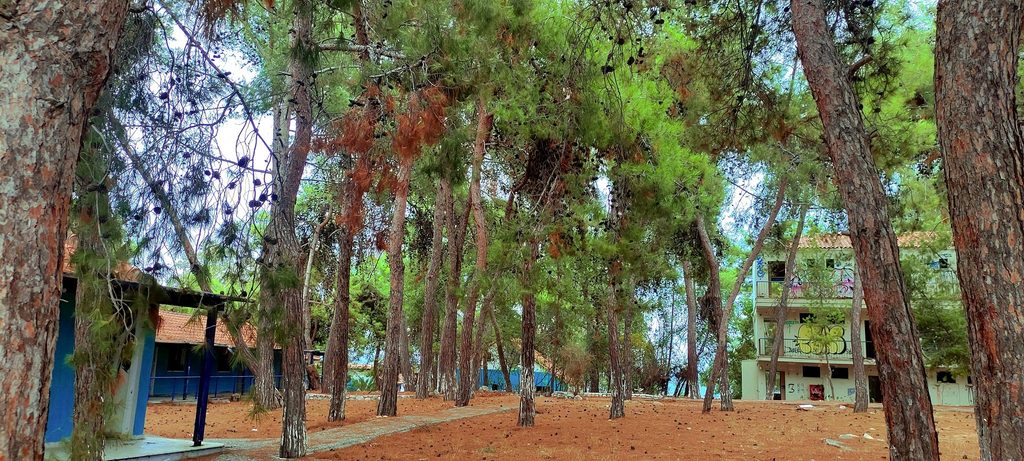
The Island of Dreams: pine forest and abandoned hotel complex
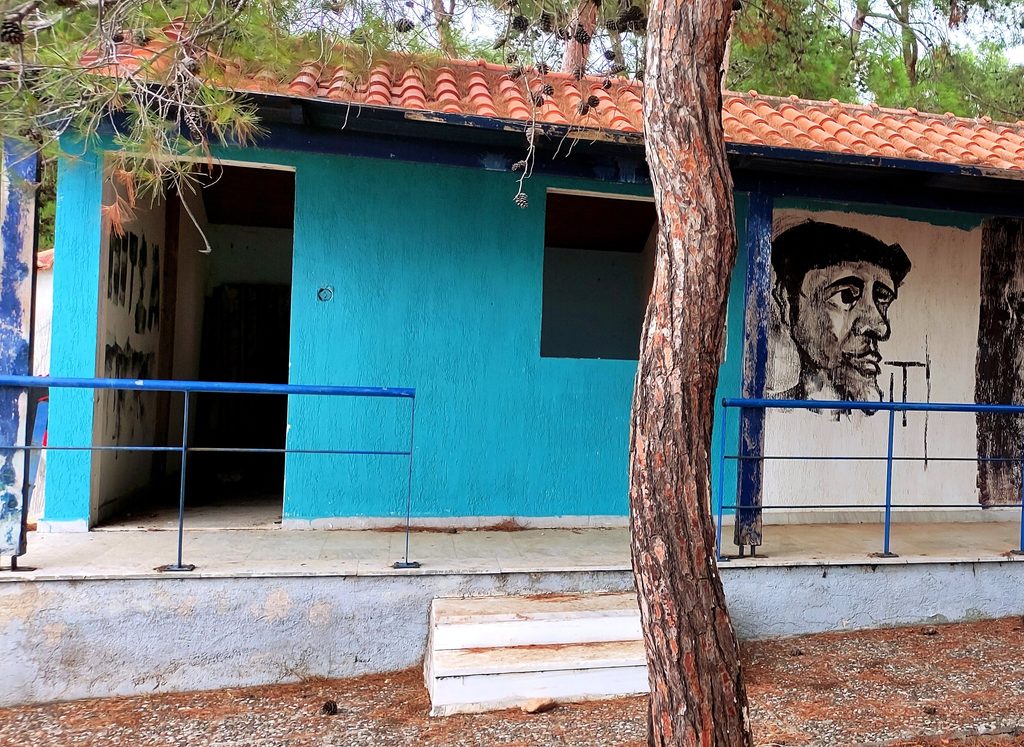
Signs of decay are visible everywhere.
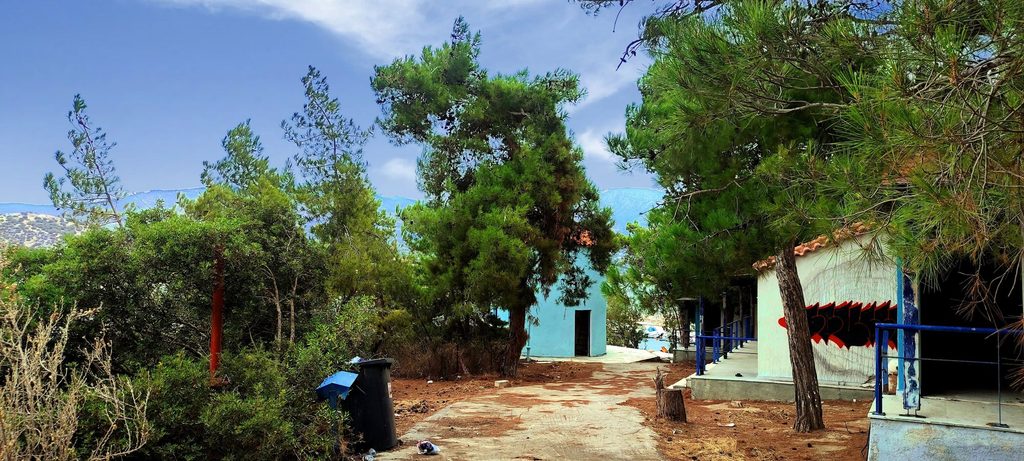
Among the pines: paths and buildings of the former resort.
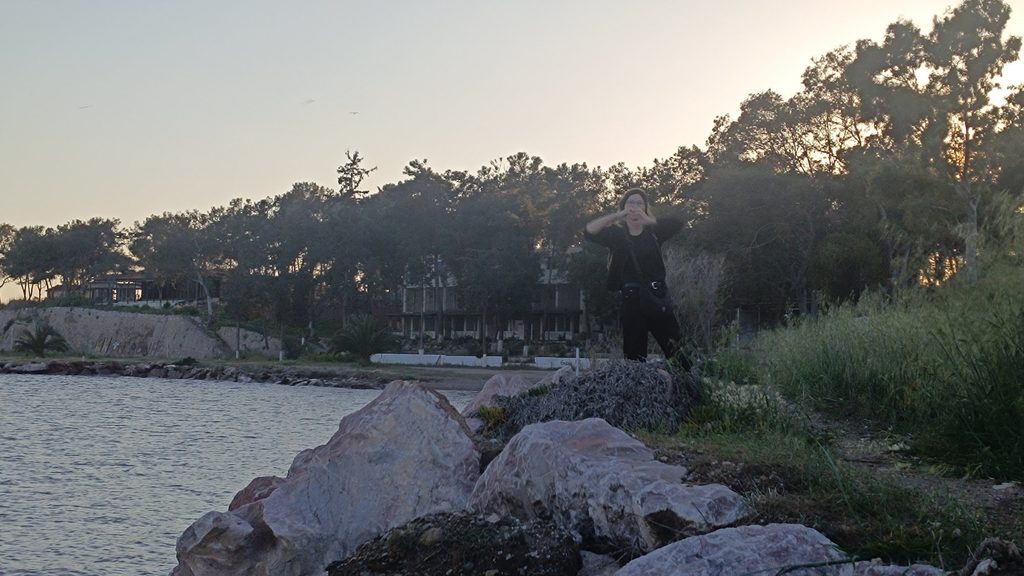
The ruins of the former holiday resort in the evening light.
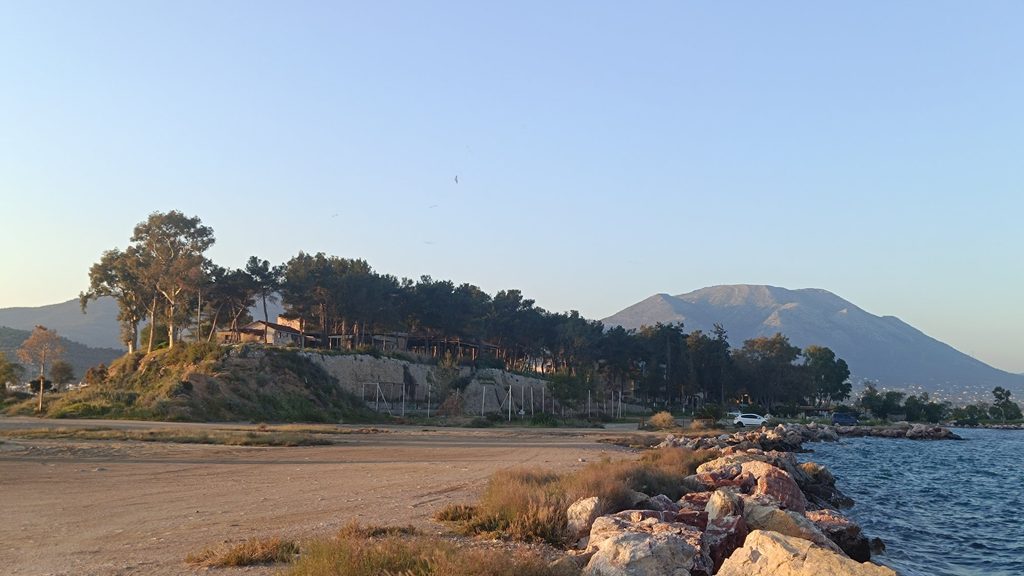
The small bay with a view of the remains of the “Island of Dreams”.
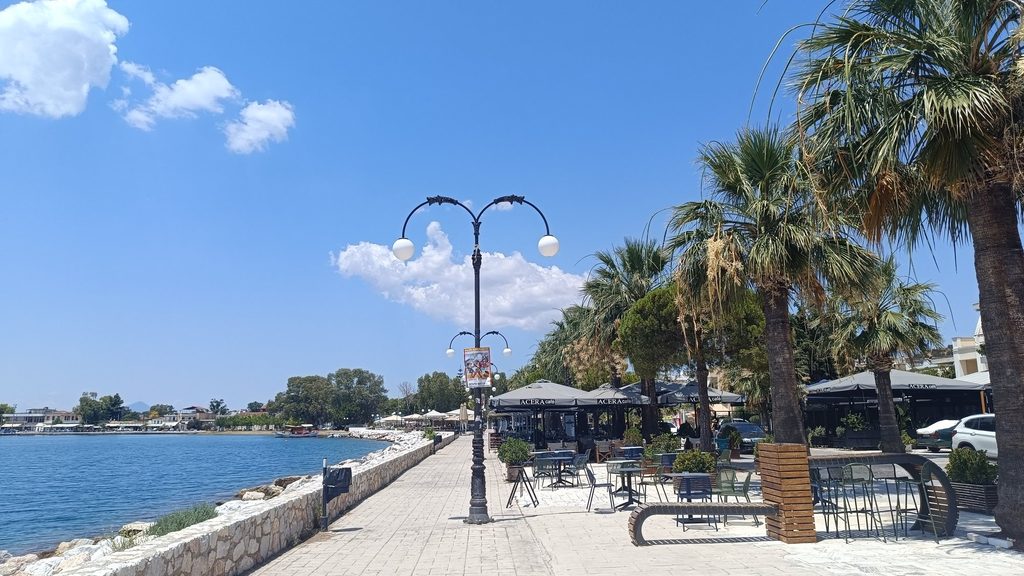
The seafront promenade with its cafés – the heart of today’s Eretria.
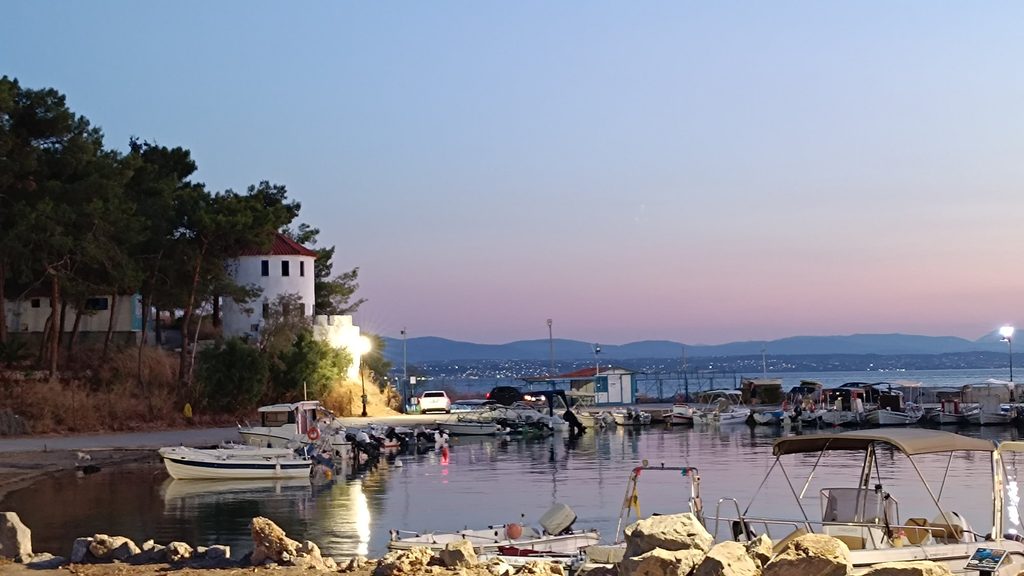
The small fishing harbour at dusk.
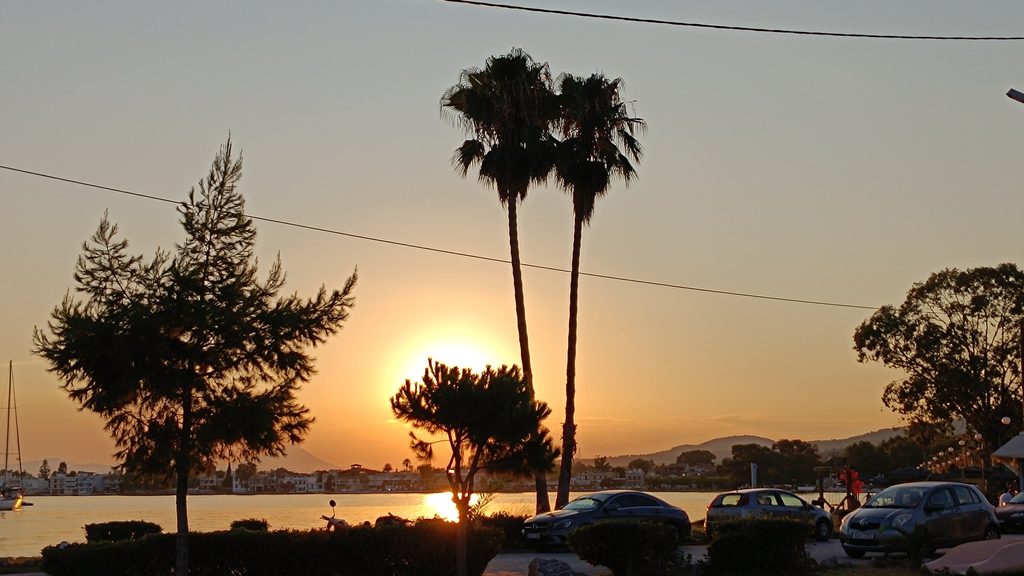
Sunset over the Gulf of Evia.
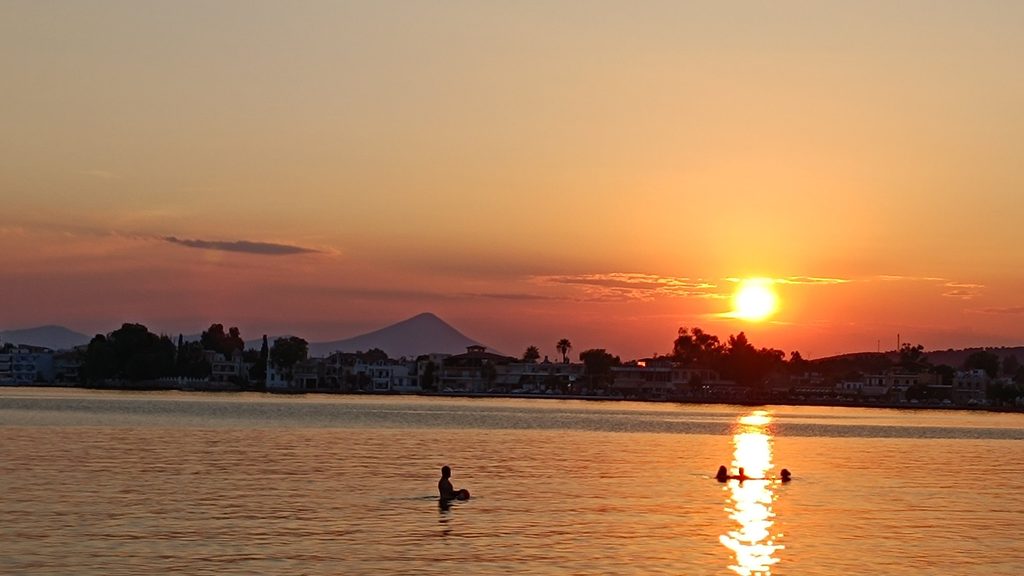
A quiet evening by the water.
Things to do in Eretria today
- Swimming: several sandy and pebble beaches right in town, with gently sloping, clear water – also great for families with small children.
- Walking & hiking: the seafront promenade, the coastal path towards the harbour and a detour to the “Island of Dreams” are perfect for long walks.
- Cycling: the mostly flat terrain around Eretria is ideal for leisurely bike rides.
- Rent sports equipment: bikes, SUP boards and similar equipment can be rented from local providers in town.
- Fishing (no licence needed in Greece!): from the shore, from the fishing harbour or on one of the small excursion boats.
- Water park with slides: the nearby Blue Water Park offers an action-packed day for the whole family.
- Use Eretria as a base for excursions: short distances to the ancient sites, to Chalkida and to the green hinterland of Evia make Eretria a practical starting point for day trips.
- Museums: the small Archaeological Museum right in Eretria and, a short trip away, the larger Archaeological Museum in Chalkida with finds from all over Evia.
Sports & leisure – local providers
| Name | Type | Phone |
|---|---|---|
| Chalkida Tennis Academy | Tennis (at Hotel Negroponte) | 697 230 0657 |
| Fitness Life Eretria | Gym, Pilates, boxing | 22290 65338 |
| Eretria Fitness Box | CrossFit, Pilates | 697 327 9713 |
| Antoniou Water Sports | Jet ski, SUP rental (Grand Bleu) | 698 411 8402 |
Excursions & tours
Evia Tours & Cruises – the local operator in Eretria offers day trips, sailing trips, hiking and mountain-bike tours on Evia.
👉 eviatours.com · Phone: 22290 64312
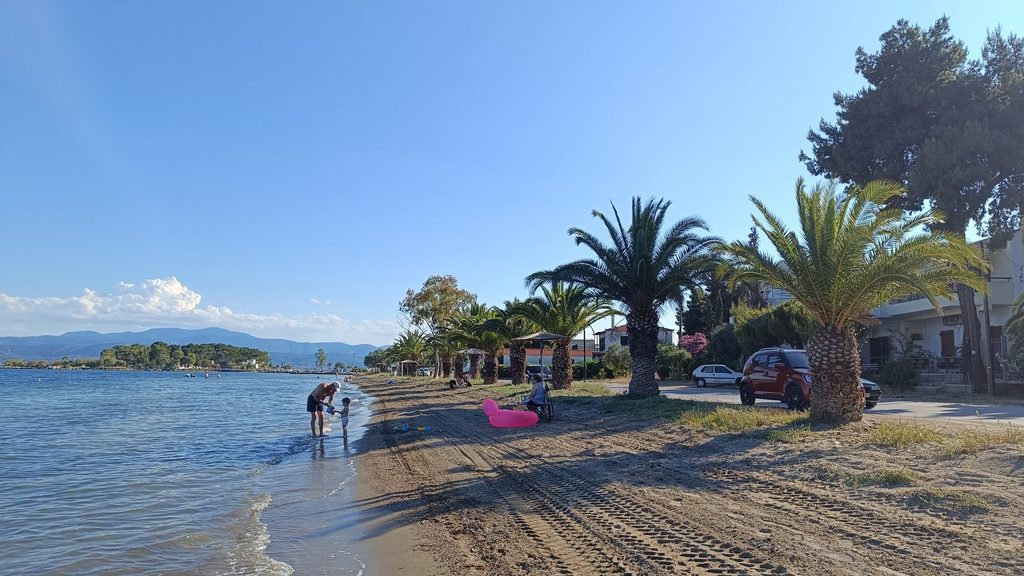
Swimming right in town – relaxed, even with children.
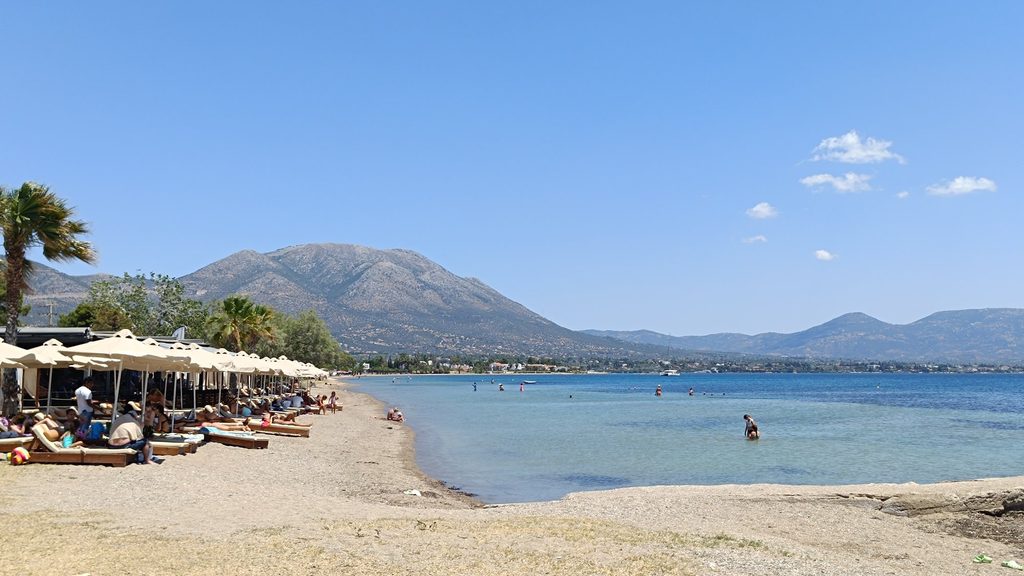
One of Eretria’s beaches.
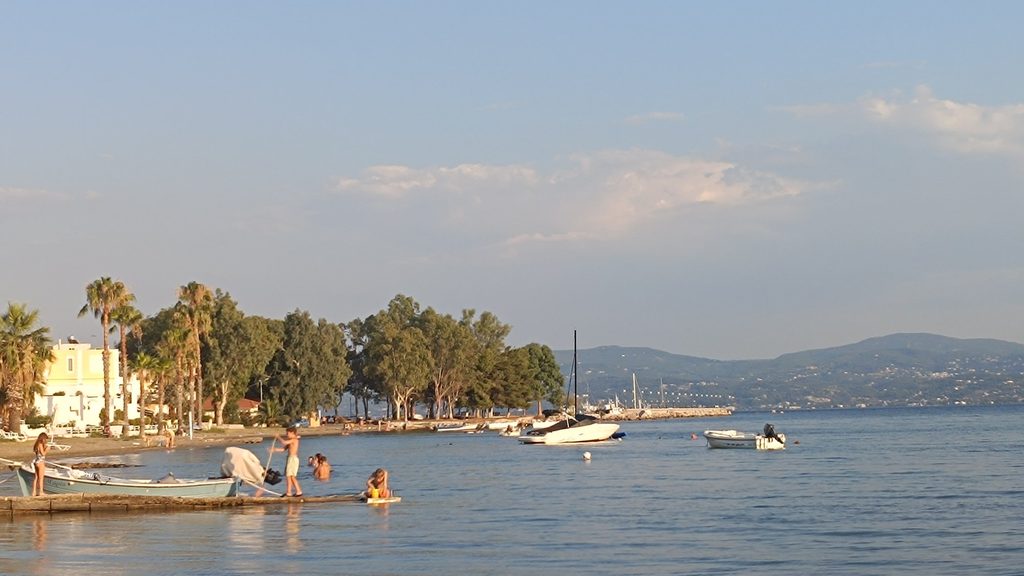
Stand-up paddling off the coast.
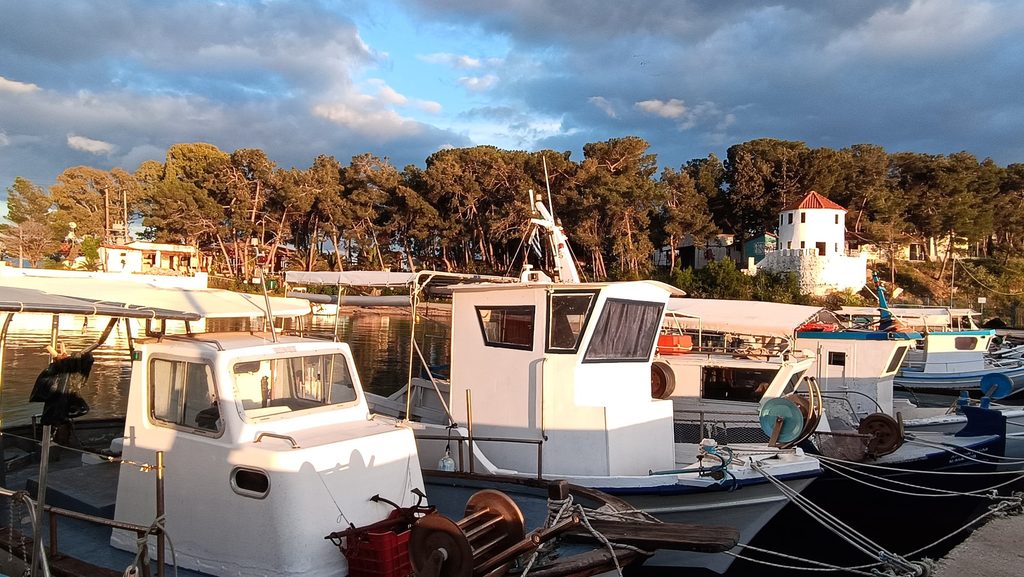
The fishing harbour
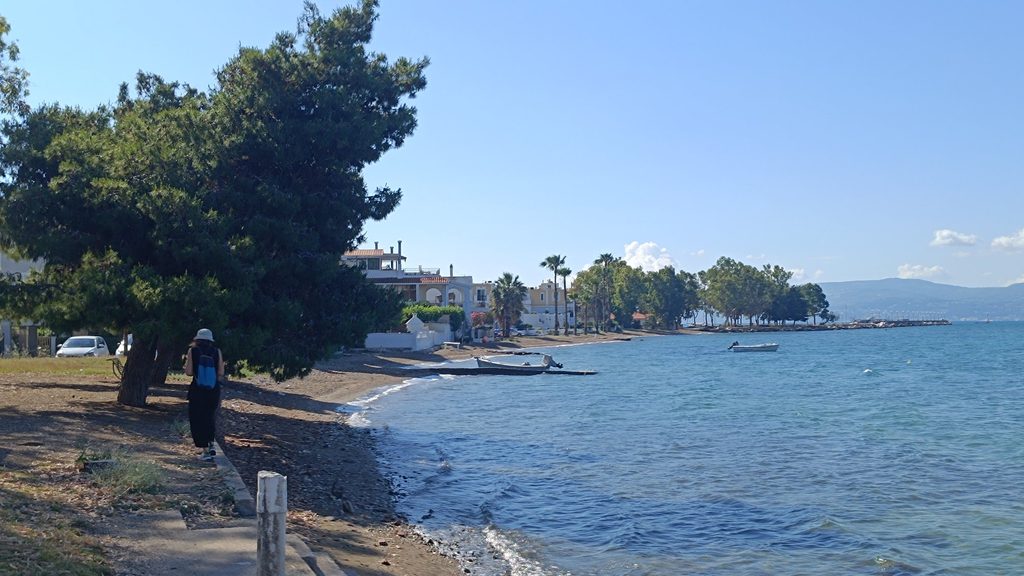
The coastal path invites you to take a walk.
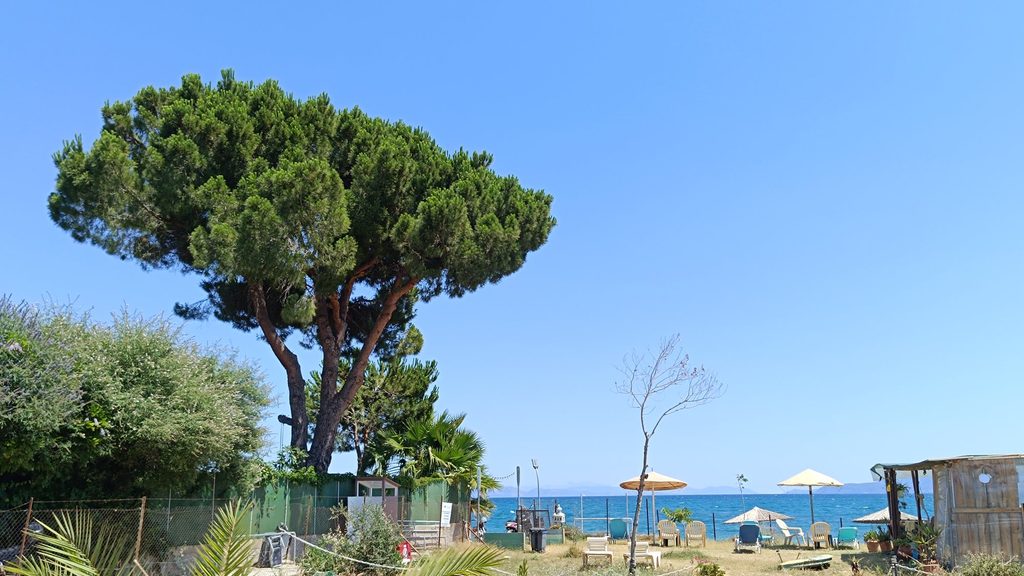
Shade under the pines, right by the water.
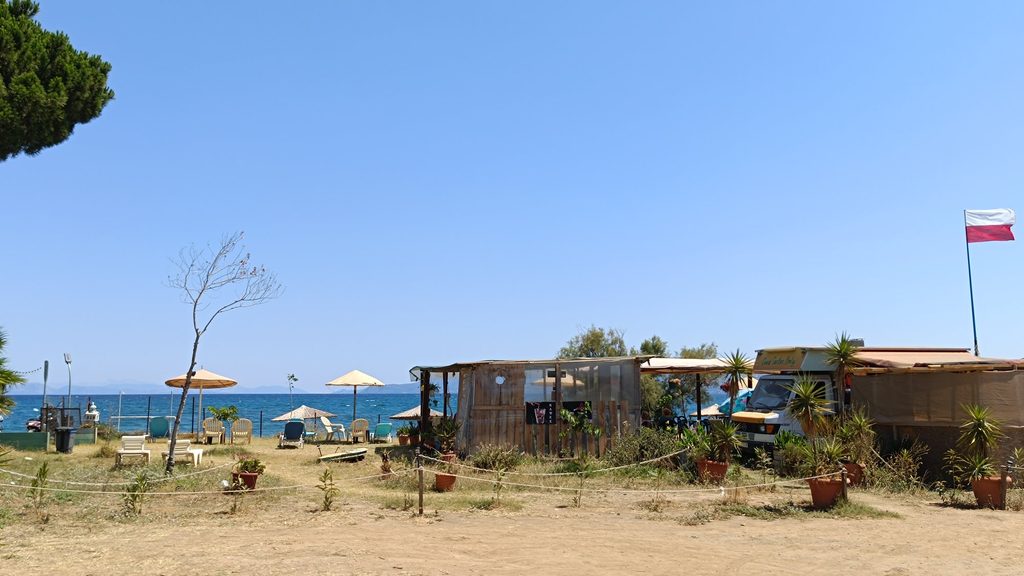
Relaxed beach life instead of loud nightlife.
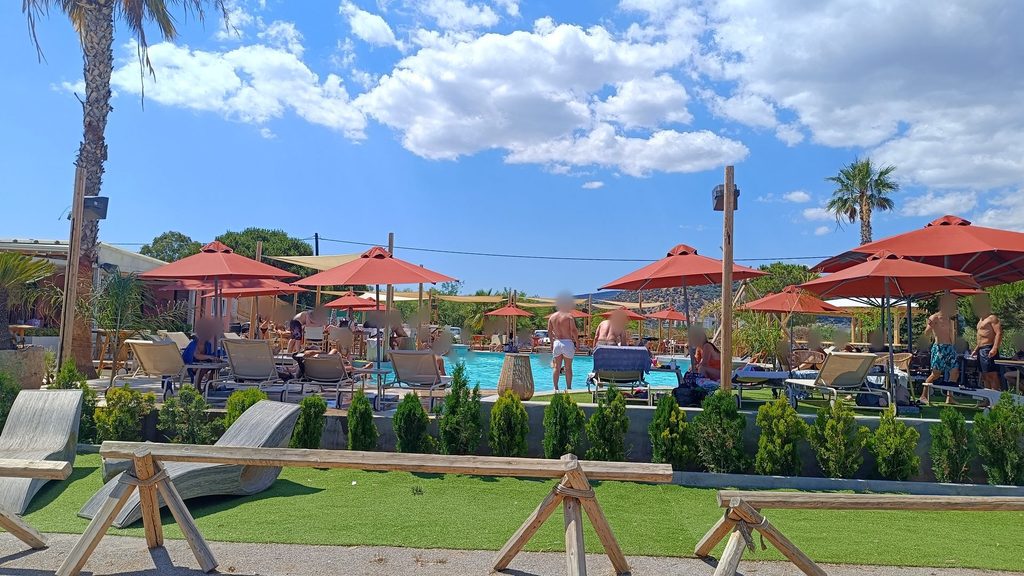
Beach bar with pool “The Crazy Pomegranate Tree”